The Seed Oil Problem
There is growing interest among nutrition researchers in seed oils' potential role in cardiovascular diseases.
Today, let’s talk about seed oils. There is growing interest among nutrition researchers in their potential role in cardiovascular diseases like atherosclerosis. Much of that interest centers on how these oils are processed, stored, and heated, rather than on the fats themselves in isolation.
I already know what you’re thinking:
What Are Seed Oils?
Seed oils refer to a group of vegetable oils extracted from the seeds of plants such as soybeans, corn, sunflower, safflower, cottonseed, grapeseed, canola, and rice bran. Today, they are mostly produced through industrial processes that involve mechanical pressing, solvent extraction (commonly using hexane), and high-heat refining.
Cold-pressed or expeller-pressed oils are made through simple mechanical pressing. They tend to retain more flavor and aroma, but they also have lower smoke points, which makes them a poor choice for high-temperature cooking. Refined seed oils go through additional steps to remove color, flavor, and residual compounds, resulting in a neutral-tasting oil with a higher smoke point and a longer shelf life.
Because they are cheap, shelf-stable, and easy to use, refined seed oils are everywhere. They dominate restaurant kitchens and are heavily embedded in packaged foods.
One practical reality I think is important to be honest about is that soybean oil, in particular, is almost impossible to avoid. It is the single most consumed cooking oil in the United States and appears in thousands of food products, often hidden behind vague labels like “vegetable oil.” Even people who actively try to avoid seed oils usually end up consuming soybean oil unintentionally through prepared and packaged foods.
Common Foods Containing Soybean Oil
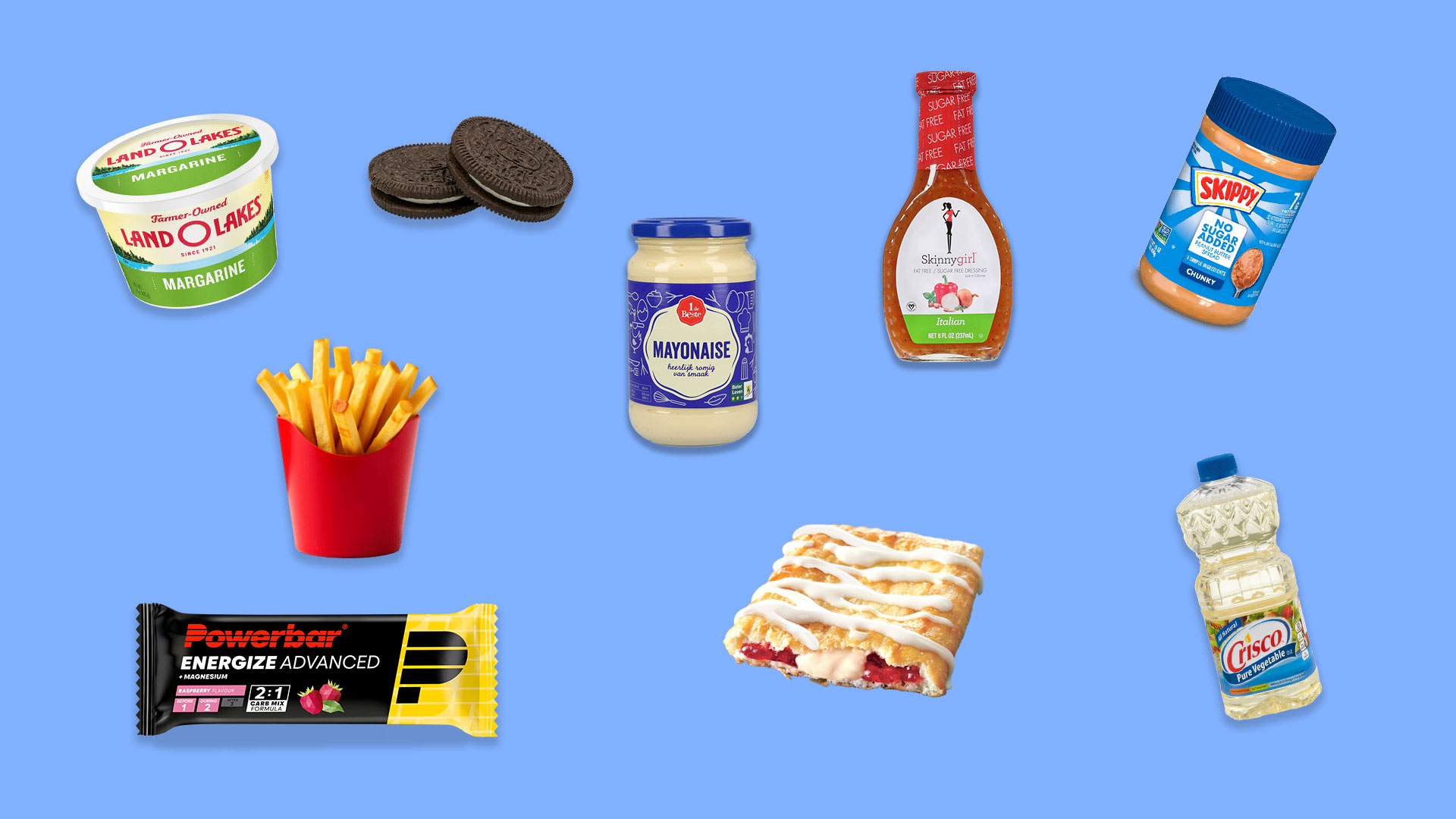
| Category | Food Examples |
|---|---|
| Salad Dressings | Italian dressing, ranch dressing, Caesar dressing, vinaigrettes |
| Mayonnaise & Spreads | Mayonnaise, sandwich spreads, aioli-style sauces |
| Margarine & Shortening | Margarine, vegetable shortening, butter substitutes |
| Baked Goods | Cookies, crackers, cakes, pastries, muffins |
| Snack Foods | Potato chips, tortilla chips, popcorn, pretzels |
| Frozen Foods | Frozen pizzas, frozen meals, frozen appetizers |
| Fast Food | French fries, fried chicken, chicken nuggets, onion rings |
| Condiments & Sauces | BBQ sauce, ketchup (some brands), sauces, dips |
| Bread & Tortillas | Packaged bread, buns, tortillas, wraps |
| Peanut Butter | Conventional peanut butter (e.g., Skippy, Jif, Peter Pan) |
| Plant-Based Foods | Meat substitutes, vegan cheeses, dairy-free creamers |
| Protein & Energy Bars | Protein bars, meal replacement bars |
| Breakfast Foods | Breakfast cereals, granola bars, toaster pastries |
| Packaged Meals | Boxed meals, instant noodles, mac and cheese |
| Cooking Oils | Vegetable oil blends, frying oils |
Unsaturated Fats, Benefits, and Limits
Seed oils are rich in polyunsaturated fatty acids, or PUFAs, especially linoleic acid (omega-6) and alpha-linolenic acid (omega-3). These fats are considered essential because the human body cannot synthesize them on its own.
Large observational studies associate linoleic acid intake with lower risk of cardiovascular disease and stroke. Controlled trials show that replacing saturated fat with linoleic acid lowers LDL cholesterol, raises HDL cholesterol, and may reduce blood pressure. When consumed in moderation and as part of a whole-food diet, these fats serve real biological functions.
That said, modern diets deliver omega-6 fats in amounts far beyond historical norms, largely through ultra-processed foods. Omega-6 fats are not inherently harmful, but excessive intake—especially when omega-3 intake is low—can contribute to metabolic imbalance. The concern is less about fat storage itself and more about oxidation and downstream inflammatory signaling.
This nuance often gets lost in polarized debates.
Oxidation: Where the Problem Starts
The same double bonds that make PUFAs biologically useful also make them chemically fragile. Oxidation begins when heat or reactive oxygen species remove a hydrogen atom from an unsaturated fatty acid, triggering a chain reaction that forms peroxides and hydroperoxides. These compounds eventually degrade into aldehydes, ketones, and polymeric by-products.
Because of this structure, oils high in omega-6 and omega-3 fats oxidize far more easily than oils higher in monounsaturated or saturated fats. Industrial seed oils are heated during processing and then exposed to heat again during cooking, compounding oxidative stress at every stage.
Refining adds another layer of damage. During deodorization, oils are exposed to very high temperatures. While some oxidation products are removed, the heat itself can generate new peroxides and aldehydes. At the same time, refining strips away natural antioxidants like tocopherols and carotenoids that would otherwise help protect the oil during storage and cooking.
Although solvents such as hexane are removed and do not remain in the final product, oxidation initiated during processing can continue during storage, transport, and eventual use.
Repeated Heating and Real-World Exposure
Where things really go off the rails is repeated high-temperature heating, especially in deep frying. Reusing oil exposes it repeatedly to oxygen, moisture, and heat, accelerating oxidation, hydrolysis, polymerization, and molecular breakdown.
These reactions produce reactive aldehydes such as 4-hydroxy-2-nonenal (4-HNE), along with polymers and volatile compounds. Animal studies consistently show that repeatedly heated vegetable oils increase oxidative stress, impair liver function, and promote fat accumulation. Repeated heating also increases trans-fat formation, particularly in PUFA-rich seed oils compared with oils higher in monounsaturated fats like olive or avocado oil.
Oxidation products such as peroxides, 4-HNE, and malondialdehyde readily react with proteins, DNA, and cell membranes. In laboratory and animal studies, they have been linked to inflammation, atherosclerosis, neurodegeneration, and metabolic dysfunction. While direct human evidence is still limited and safe intake thresholds are not well defined, the direction of risk is clear.
Why the Benefits Don’t Hold Up in Practice
While seed oils can provide essential fatty acids under controlled conditions, those benefits largely fall apart in the real world. The oils people actually consume are not fresh, gently handled sources of linoleic acid. They are industrially refined, stored for long periods, exposed to light and oxygen, and often heated multiple times before they ever reach a plate.
Most seed oils sit on supermarket shelves for months, frequently in clear plastic bottles under fluorescent lighting. By the time they are purchased, oxidation has already begun. Cooking—especially at high temperatures—only accelerates the damage. At that point, the discussion shifts from essential nutrients to degraded fats and reactive by-products.
Any potential benefits associated with linoleic acid can be obtained from more stable, traditional sources such as extra-virgin olive oil, which provides monounsaturated fats along with natural antioxidants that help protect against oxidation. There is no nutritional requirement to consume industrial seed oils specifically.
Given how unstable these oils are, avoiding them altogether is a more practical and precautionary approach than trying to manage intake or balance ratios.
Practical Recommendations
- Avoid seed oils entirely. This includes soybean, corn, sunflower, safflower, grapeseed, and generic “vegetable oil.”
- Avoid repeated high-temperature frying. Reusing unstable oils dramatically increases oxidation and toxic by-products.
- Use stable, traditional fats instead:
- Extra-virgin olive oil for raw use or light sautéing
- Avocado oil for higher-heat cooking
- Butter or clarified butter (ghee) for medium to high heat
- Coconut oil for high-temperature frying and reuse
- Avoid pre-made foods such as commercial salad dressings, mayonnaise, margarine, sauces, and spreads.
- Make simple foods at home. Olive oil, vinegar, and salt beat anything from a bottle.
- Choose natural peanut butter. Most conventional peanut butters remove natural peanut oil and replace it with soybean oil.
- Prioritize whole foods. This is the simplest way to reduce oxidized oil exposure.
- A little seed oil is ok. Cold-pressed sesame oil is a good example. It adds great flavor, but it should be kept refrigerated, used only cold or at very low heat, stored in a dark container, and never kept past its shelf life.
I know you’ve had it drilled into your head your entire life that saturated fats are bad for your heart. This is absolutely false. Saturated fats are not uniquely harmful, and they are far more stable under heat than polyunsaturated oils. When choosing cooking fats, chemical stability matters as much as nutrient content.
What Can I Do Now?
The goal isn’t to micromanage fats or chase perfect ratios. It’s to reduce exposure to oxidized oils in a food environment that makes oxidation almost unavoidable.
Start by removing industrial seed oils where you can and replacing them with stable, traditional fats. Cook at home more often. Avoid ultra-processed foods. Use fats that tolerate heat without breaking down, and treat fragile oils as flavorings rather than staples.
You don’t need to fear fat. You need to be selective about which fats you use and how they’re handled. Focus on chemical stability, freshness, and simplicity. That alone goes a long way toward reducing unnecessary oxidative stress and improving long-term metabolic health. 😊
Sources
Johns Hopkins Bloomberg School of Public Health, The Evidence Behind Seed Oils’ Health Effects — seed oils contain essential fatty acids and are widely studied for health impacts including cardiovascular disease risk.
Gharby et al. (2025), Vegetable Oil Oxidation: Mechanisms, Impacts on Quality, and Health — review of oxidation mechanisms affecting oil quality, formation of undesirable compounds, and potential health concerns.
Tan et al. (2018), Oxidative Changes in Repeatedly Heated Vegetable Oils (ResearchGate) — study on how repeated heating affects oxidative stability in commonly used vegetable oils like soybean and corn.
A large umbrella review on vegetable oil health effects (PubMed) — evidence synthesis on health outcomes associated with various vegetable oils, including PUFAs, MUFAs, and their associations with mortality and cardiovascular risk.
More from Healthful
- Yes, You Can Eat the Yolk
Eggs are nutrient-dense whole foods, not something most people need to fear. The larger dietary pattern is what matters.
- The Link Between Heritage and Metabolism
Understanding where you come from can help you eat in a way that makes sense for your biology.
- Big Food Addiction Engineering: A Diabolical Plot
It's not your fault. Big food is keeping you addicted to processed foods. A look at how they do it.
- How Big Food Exploits Our Brain's Reward System
Modern food is engineered for stimulation. Overeating isn't weak willpower — it's what happens when industry learns to hijack appetite.